
Skin Feeling More Dry and Sensitive in Your 40s?
-
By Tyesha Lewis
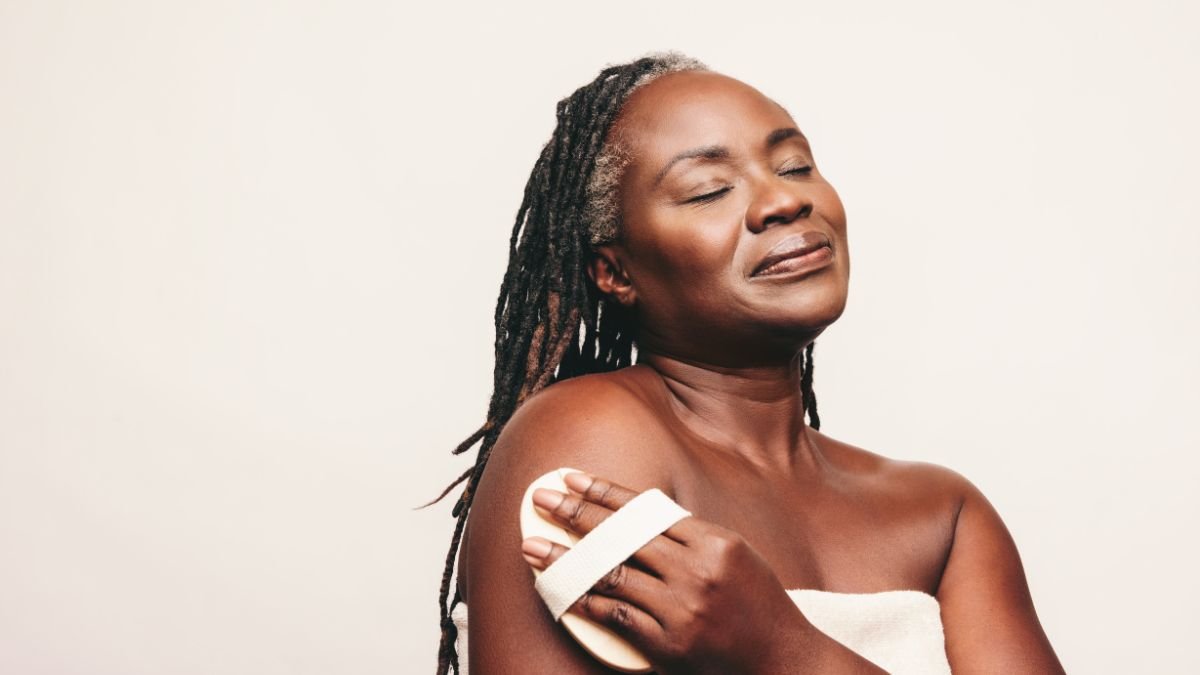
Dry sensitive skin in your 40s can feel confusing and frustrating. Learn why it happens, how hormones and stress affect your skin and what your skin is really asking for in a calm, realistic way that fits real life.
Key Takeaways
In this blog, you’ll learn:
- Why menopausal and perimenopausal skin often becomes dry and sensitive
- What actually happens to your skin in your 40s (hormonally and biologically)
- The most common skin problems women experience after 40
- Why breakouts can still happen, even when skin feels dry
- How stress and lifestyle changes affect the skin barrier
- What your skin is really asking for at this stage of life
- How to support changing skin calmly, without doing more
This blog is not about quick fixes or introducing the latest trends.
It’s about understanding what your skin is communicating to you and how to care for it differently.
Why Your Skin Suddenly Feels Different
If your skin feels drier, tighter, or more sensitive in your 40s, you’re not imaging it and you’re not doing anything wrong.
Many women reach this stage of life and quietly wonder why the products they’ve used for years no longer seem to work. Moisturisers that once felt nourishing now seem to disappear and your skin now feels uncomfortable by midday. Sensitive skin can appear out of nowhere often leaving us frustrated, self-conscious and somewhat confused as to what it’s related to.
The truth is far more simple, and much kinder than that.
Skin changes in your 40s are normal, they’re biological , hormonal, and deeply connected to the way we live our lives at this stage. Your skin isn’t breaking down, it’s communicating with you.
This article will explain what’s really happening beneath the surface, why dryness and sensitivity often arrive together, and how to respond in a way that supports your skin rather than fighting it.
What are the Common Skin Problems After 40?
Many women are surprised by how many different skin changes can happen at once.
Common skin concerns after 40 include:
- Dry or tight skin
- Increased sensitivity or redness
- Sudden reactions to products
- Uneven texture
- Hormonal breakouts
- Dullness or loss of glow
These issues often overlap, for example, skin can feel dry and still and still break out. This can feel confusing, but it usually points to a compromised skin barrier, and this can be as a result of what is happening inside our bodies.
Understanding this helps you stop treating symptoms separately and start supporting skin more holistically.
Why Is My Skin Breaking Out in My 40s?
Breakouts in your 40s are more common than people realise, and they’re not a sign to use more products.
Hormonal fluctuations can affect the oil distribution in the skin, even if overall oil production is lower. This can lead to:
- Congestion
- Hormonal acne around the chin and jaw
- Sensitivity alongside breakouts
- Dryness
- Irritability
Stress also plays a role. Elevated cortisol can lead to increased inflammation can disrupt the skin barrier, making skin more reactive and more prone to breakouts.
The mistake many women make is trying to “dry out” the skin further, using different “trending” products and in fact doing more often worsens both breakouts and increases sensitivity.
At this stage of life, breakouts usually respond better to consistent barrier support using nourishing rich moisturisers and gentler routines rather than aggressive treatments.
How Do I Get Rid of Menopausal Dry Skin?
I often have many women ask this question and the answer isn’t about finding a miracle product or a one time fix because it isn’t just one reason why your skin is dry.
Menopausal dry skin improves when you:
- Support the skin barrier
- Reduce moisture loss
- Avoid skin stripping routines
- Nourish consistently rather than aggressively
Doing more isn’t the answer. Doing less, more gently, daily is often the solution.
This includes:
- Avoiding harsh cleansers
- Moisturising slightly damp skin
- Keeping routines simple and consistent
- Reducing hot water exposure
- Supporting skin with nourishing textures
Dry menopausal skin needs patience and protection, not pressure.
The Quiet Shift That Happens in Your 40s
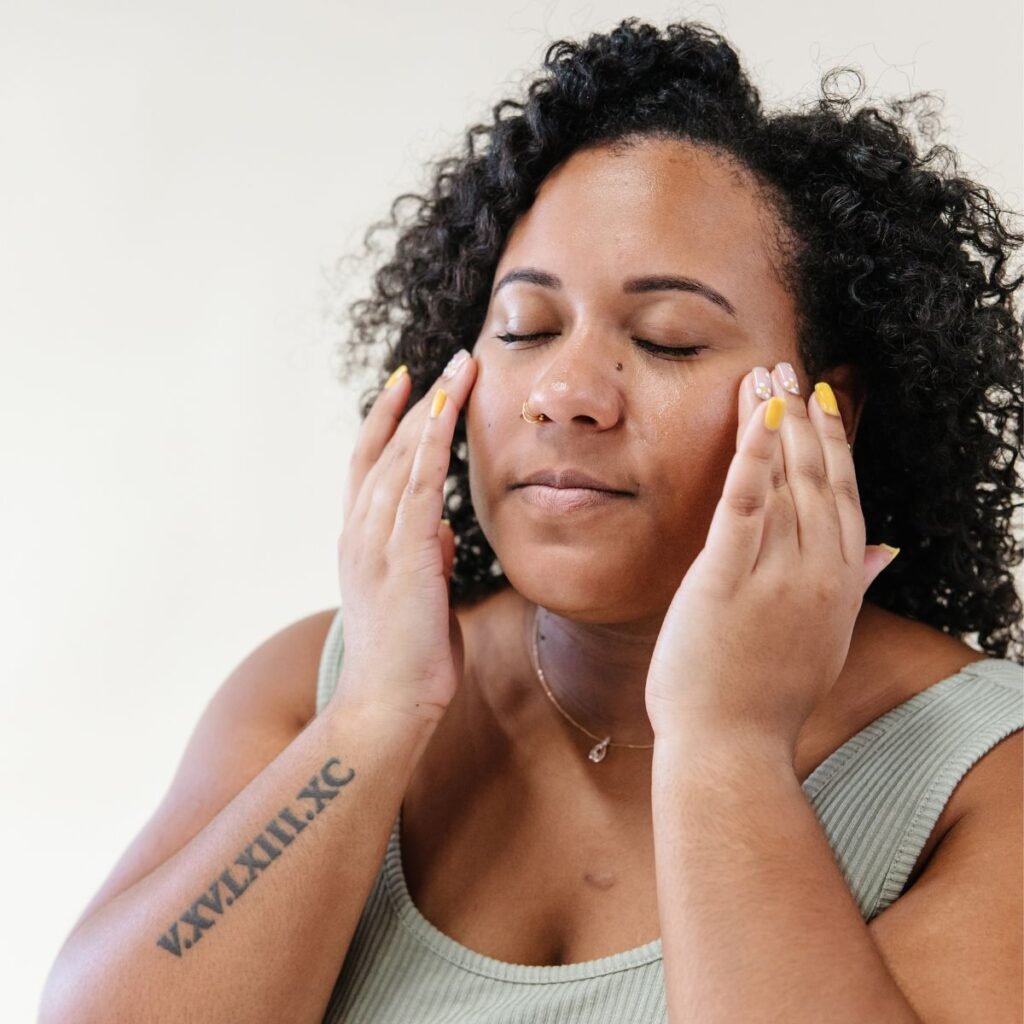
Skin doesn’t suddenly change overnight, and for many women they can notice a more gradual shift in their late 30s early 40s.
Skin may begin to:
- Feel tighter after washing
- Become flaky or rough in places it never did before
- React to products that you’ve been using for a long time
- feeling more uncomfortable under your clothing
- Lose its softness or glow it once had
These changes often coincide with other life shifts that can be going on when you’re in your 40s, caring for aging parents, work and family life balance, midlife identity crisis, caring for children with disabilities, and even empty nest syndrome and trying to figure out what your mission in life is now. The stress of these potential responsibilities can show up on your skin, with break-outs even when you’re skincare routine hasn’t changed.
Hormones and Skin Changes
Oestrogen plays a key role in skin health. Think of it as being the scaffolding that supports our skins:
- Natural oil production
- Skin thickness and resilience
- Moisture retention
- Barrier strength
As women move through perimenopause and into menopause, oestrogen levels fluctuate and gradually decline. When this happens, the skin produces less oil and becomes thinner and more fragile over time.
Less oil means less natural protection. Moisture escapes more easily. The skin barrier which is the outer layer of the skin that keeps water in and irritation out, thus creating a more resilient barrier.
This is why dryness often appears first. And once the barrier is compromised, sensitivity tends to follow.
Dry and Sensitive Skin Are Often Linked
Dry skin and sensitive skin are often treated as separate problems, but in reality they are closely connected.
- Dryness weakens the skin barrier.
- A weakened barrier allows irritants in.
- When irritants get in, the skin reacts.
- This reaction can show up as:
- Stinging or tingling
- Redness
- Itchiness
- Discomfort after washing
- Sudden intolerance to products
So when your skin becomes sensitive, it’s communicating to you that it’s vulnerable right now. This is the opportunity to listen to your body instead of jumping onto the latest trend to fix the problem.
Your skin is asking for protection, not panic.
Most People Overlook The Skin Barrier
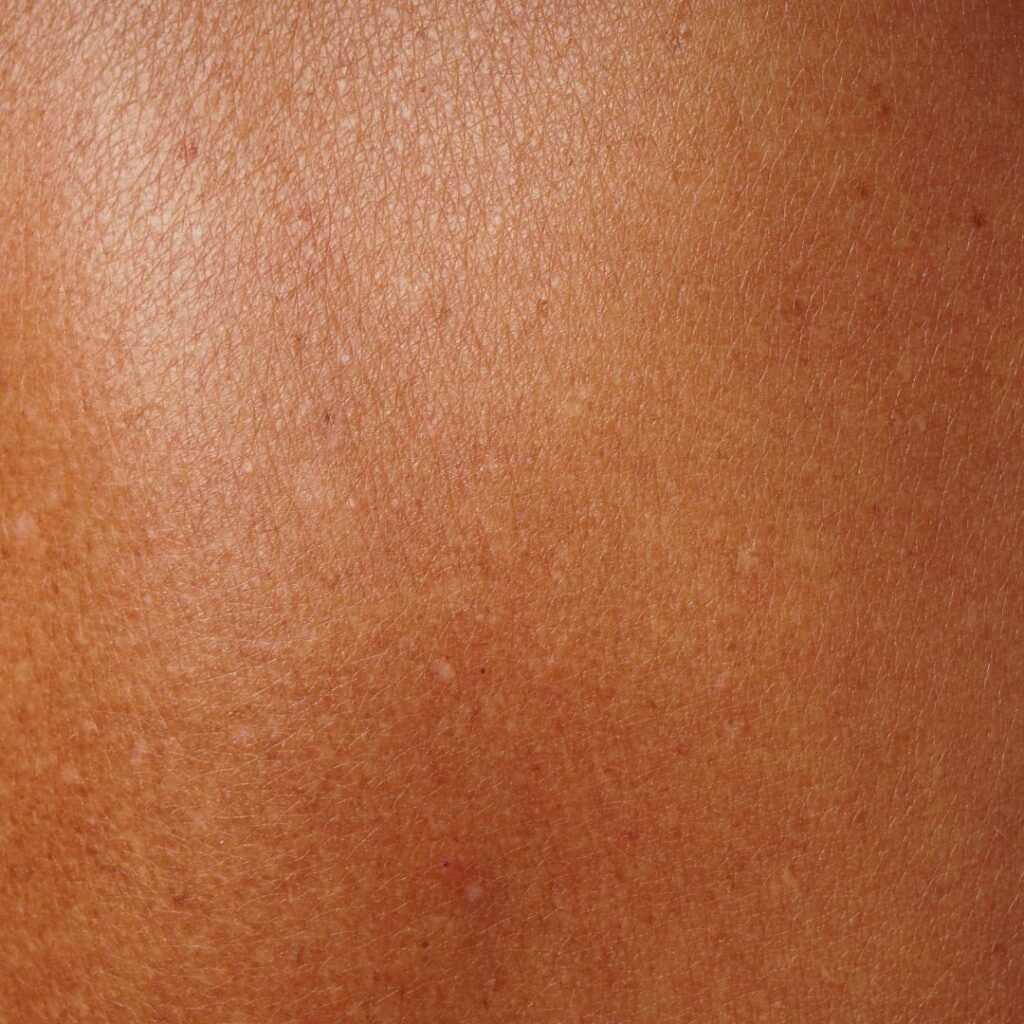
The skin barrier is one of the most important, yet misunderstood aspects of your skin health.
Think of it like a wall.
The skin cells are the bricks.
Natural oils and fats act like the mortar that holds everything together.
When the wall is strong:
- Moisture stays in
- Irritants stay out
- Skin feels more comfortable and resilient
- When the wall is damaged
- Moisture leaks out
- Skin feels tight and dry
- Sensitivity increases
In your 40s, the “mortar” naturally becomes harder to maintain. If your routine consists of frequent washing, hot showers, harsh cleansers, stress, and lack of rest (you time) your barrier will struggle resulting in your skin taking longer to repair during flare-ups.
Why Stress Shows Up on the Skin
Stress doesn’t just live in the mind. It lives in the body, and the skin is one of the first places stress appears.
If stress levels are high, the body produces more cortisol (stress hormones), which in return affects:
- Oil production
- Inflammation
- Barrier repair
- Skin healing
This means that during the stressful periods, skin may:
- Feel drier than usual
- Flare up unexpectedly
- Take longer to recover
- Feel more reactive
This doesn’t mean stress is “causing” your skin problems. It means your skin is responding to your external environment.
Why Doing More Maybe Worse
When skin feels dry or sensitive, the natural reaction is to do more:
- More products
- More exfoliation
- More switching
- More “fixing”
- More trends
But sensitive skin needs quite the opposite, and requires a less is more attitude towards your skincare care routine.
Here’s why: Every new product introduces new ingredients your skin has to process. For a compromised barrier that’s already struggling with hormonal changes and decreased oil production, this constant influx can feel like repeated disturbance rather than the support your skin actually needs.
In many cases, the dryness and sensitivity that brought you here improve not when you add more products to your routine, but when you simplify it.
Your skin needs three things to repair itself:
1. Time: To complete its natural repair cycle without interruption
2. Consistency: The same reliable ingredients your barrier can learn to work with
3. Predictability: A stable routine that doesn’t keep changing the rules
Think of it this way, if your skin barrier is like a wall with cracks, constantly applying different materials makes it harder for the wall to settle and seal. But giving it the same high-quality materials consistently? That allows real repair to happen.
So What Is Your Skin Really Asking For?
If skin could speak, dryness and sensitivity would not sound like complaints. They would sound like requests.
Your skin is asking for:
- Nourishment rather than stripping
- Protection rather than correction
- Consistency instead of constant change
- Gentler routines that fit real life
This is where skin-mindfulness comes in.
Skin-mindfulness isn’t about adding another task to your day. It’s about changing how you approach something you already do by noticing how your skin feels, and responding more calmly, and allowing care you give for your skin to become supportive rather than rushed.
Skin Touch and Ritual Matters More Than You Think
The skin is closely connected to the nervous system. Gentle, consistent touch when applying your moisturiser sends signals of safety and calm to the body. By changing your mindset around moisturising as a ‘routine’ and seeing this moment as a ‘ritual‘ by carrying out slow, intentional touch application which helps reduce stress responses and reduces the risk of hormonal skin flare-ups.
Rituals can be as simple as:
- Applying moisturiser more slowly
- Paying attention to how your skin feels after washing
- Choosing products that feel comforting rather than harsh
- Using the same few products consistently
These small shifts can have a surprisingly calming effect on both your skin and nervous system.
Letting Go of The Idea That Something Is “Wrong”
One of the most important shifts for women in their 40s, is letting go of the idea that skin changes means failure.
Skin isn’t meant to stay the same forever. It changes as we do.
Dryness and sensitivity are not signs that you’ve neglected your skin or chosen the wrong products for years. They are signs that your skin needs a different kind of care now.
- Care that is slower.
- Care that is more nourishing.
- Care that works with your body instead of against it.
A Calmer Way Forward
You don’t need to overhaul everything at once. You don’t need to chase trends or expensive solutions. And you don’t need to punish your skin into behaving.
Start by listening.
- Notice how your skin feels.
- Notice what makes it better or worse.
- Choose routines that support comfort rather than urgency.
Dry, sensitive skin in your 40s is not a problem to fix. It’s an invitation to care for it differently, care that fits realistically into your life calmly, consistently, without the pressure of what society thinks you should look like.
What shift is happening in your life right now?
Comment below.
A Gentle Invitation
If you’d like ongoing guidance on caring for changing skin in a calm, realistic way, you’re welcome to join my Glow and Nourish Club. I share simple, thoughtful insights designed to support women in the 40s without overwhelm or societal pressure.
NOURISH your skin. PROTECT your body. GLOW from within.
*This content is for educational purposes only and does not replace medical advice. Always read the label and patch test before use and consult a medical professional if you have specific skin concerns.
*This post may contain affiliate links. If you purchase through these links, I may earn a small commission at no extra cost to you. I only recommend products I genuinely believe may be helpful.
#dryskin #womenin40s #glowingskin #meopausalskin #agepositiveskincare #soleilraskincare