
Why Is My Skincare Routine Not Working Anymore?
-
By Tyesha Lewis
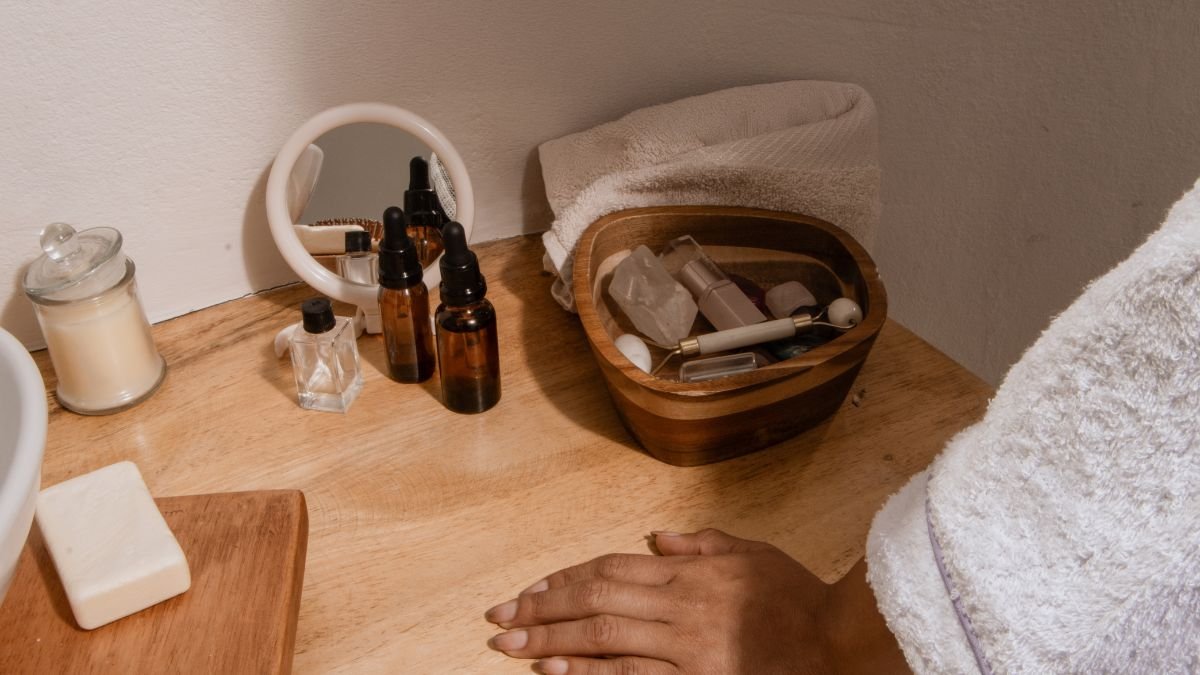
A no-nonsense guide for women in their 40s by a woman in her 40s, who are ready to find out why their skincare routine all of a sudden isn’t working like it used to.
You’re using the same cleanser you’ve loved for years, the same moisturiser that has always been effective, you’ve applied the same routine that got you through your 30s until now without a second thought. And yet, something is off? All of a sudden your skin looks dull. Your skin is drier in places it never used to be. Your skin is breaking out in the same way it did in your teens, then the next minute your skins reacting to everything you’ve always been using. Or have you been known to follow the latest social media trends frantically trying to fix your skin, piling on product after product and your skin still just looks, tired?
If this sounds familiar? You are far from alone.
This is one of the most common experiences for women moving through their 40s and one of the least talked about once you hit your perimenopausal and menopausal stages. The moment your skin seems to stop responding to everything you’ve always trusted. The frustration and confusion kicks in. Spending money on things that aren’t working, and then there’s that quiet worry that maybe this is just what aging looks like now.
So What’s Happening To My Skin?
In your 40s, several biological shifts happen at once that alter the way your skin behaves, absorbs, and responds to products, and in many cases your skincare routine haven’t yet caught up with these changes.
- Oestrogen levels begin to fluctuate and decline during perimenopause, and oestrogen plays a direct role in skin hydration, collagen production, and barrier function. As levels drop, skin becomes thinner, drier, and more reactive.
- Cell turnover which is the process by which your skin sheds old cells and generates fresh ones, significantly slows down. This means products that once absorbed beautifully may now sit on the surface, and active ingredients that your younger skin may have processed efficiently may now cause irritation.
- The skin barrier itself becomes more permeable and less resilient. This means moisture escapes more easily, irritants penetrate more readily, and products that were once perfectly fine can suddenly feel uncomfortable, sensitising, or simply ineffective.
“Your skincare routine isn’t failing you. It’s just speaking a language your skin has quietly stopped understanding. The answer isn’t more products it’s asking for the right product.”
Here’s the thing that nobody tells you, is that the routine that worked brilliantly for you in your 30s was built for a different skin. The skin you have now is not worse, it just has different needs. More nourishment. Needing more gentler actives, deeper moisture, and often quite counterintuitively, less.
How to Tell If Your Skincare Is Not Working
It can be hard to know whether what you’re experiencing is a sign that something isn’t right for your skin, or just a normal part of adjustment. Here are the signs that your current routine may not be serving your skin well:
→ Persistent dullness that doesn’t lift, even after moisturising skin looks flat rather than healthy.
→ Tightness or dry patches that appear shortly after cleansing and don’t resolve through the day.
→ Breakouts appearing in places you don’t usually get them, or a general increase in congestion or sensitivity.
→ Redness or stinging when applying products you’ve used without issue for a long time.
→ Products absorbing poorly or balling up on the skin often are signs of too many layers or the wrong formulations layered together known as ‘product overload’ (explained below).
→ No visible improvement with dullness, uneven tone, or fine lines, even after consistent use for three or more months.
Any of these can signal that your skin has changed and your routine needs to change with it. But before you rush out to buy a whole new shelf of products, there’s something important to consider, and it might surprise you.

What Does Purging Skin Look Like? (And Is That What’s Happening?)
If you’ve recently introduced a new active ingredient, like a retinol, an AHA (Alpha Hydroxy Acids), or a vitamin C and your skin has suddenly broken out or become more congested, you might be wondering whether this is purging or whether the product simply isn’t right for you.
Skin purging is a real thing, it happens when an active ingredient speeds up cell turnover, bringing any existing congestion, or blocked pores that haven’t yet surfaced to the skin faster than it would naturally appear. So if you were going to get those breakouts anyway, the active ingredient has simply accelerated the process.
Purging typically looks like small whiteheads or pustules, appearing in areas where you usually break out. It generally resolves within four to six weeks as the skin adjusts. The key thing is that purging appears in your normal breakout zones and clears on its own.
What is not purging is a reaction. If you’re experiencing breakouts in new areas, widespread redness or irritation, burning or stinging during or after application, or worsening skin that doesn’t settle after six weeks, that is likely a reaction, not purging, and it’s a sign the product isn’t compatible with your skin right now.
For women in their 40s with a more reactive, thinner barrier, true purging can sometimes be harder to distinguish, and strong actives can be more likely to cause genuine reactions rather than productive purging. If in doubt, scale back and simplify.
Why Is My Skincare Doing Nothing? The Layering Problem
There’s a particular pattern that’s incredibly common among women who are trying to address multiple skin concerns at once and it often makes everything worse, not better.
It goes like this, your skin starts to look dull or dry or uneven. So you add a brightening serum. That doesn’t seem to be doing much, so you add an exfoliating toner. Your skin starts to feel a bit sensitive, so you add a cream or two. The breakouts that appeared after introducing the actives prompt you to add a spot treatment. And before long, you have eight products going onto your skin in a specific order, and your skin looks worse than when you started.
This is sometimes called ‘skincare overload‘, and is more common than you think. Adding lots of active ingredients that are competing or conflicting with each other on the skin. Or too many products being layered into your barrier that your skin can’t process them all. Harsh cleansing products that are stripping the very moisture you’re desperately trying to replace.
Then skin becomes overwhelmed. And overwhelmed skin does not thrive.
“More products is not the same as more care. Sometimes the kindest thing you can do for your skin is to clear the shelf and start over with less, and better.”
Why Simpler Skincare Often Works Better
This might be the section that surprises you most. Because we live in a culture that treats skincare as something to be optimised, layered, and upgraded constantly. More steps. More actives. More tools. But the evidence and the experience of many women including myself, suggests simpler often works better.
There are genuine benefits to scaling back. When you remove unnecessary products, you immediately stop the risk of ingredient interactions, where one product undermines or conflicts with another. You give your skin a chance to breathe and regulate itself. You reduce the load on a barrier that is already working hard dealing with hormonal change. Most importantly scaling back allows you to create space to actually see what’s working and what’s not.
Skin Fasting
The concept of ‘skin fasting‘ is that of temporarily applying nothing, or adopting the concept of skin minimalism has gained genuine traction in the skincare world for this reason. When stripped of all the layers, skin often recalibrates and reveals its true condition communicating what it actually needs, rather than what it’s been given. Many women report that after a period of doing less, their skin looks calmer, feels more balanced, and skin seems genuinely healthier.
This doesn’t mean doing nothing forever. It just means taking time in understanding that your skin has its own intelligence constantly communicating, and sometimes the most powerful thing you can do is step back and let it speak.
But here’s the nuance, doing less only works brilliantly if what you do use is genuinely right for your skin. One poorly formulated product is just as worse as ten. The way forward is simplicity, effectiveness and sustainability in having one beautifully formulated, multi-use product? That’s where the magic lives.
NOURISH. PROTECT. GLOW ~ SOLEILRA
If you’re stripping your routine back to the essentials, what stays in your skincare arsenal needs to work harder and smarter. SOLEILRA body butters are formulated to nourish, protect, and glow, supporting dry, sensitive, changing skin with plant-based active ingredients that does good for your skin, and the planet.
In a market that’s louder and more crowded than ever, SOLEILRA doesn’t chase trends. We speak directly to the woman in her 40s who takes care of everyone, and is ready to take care of her changing skin too. Quietly radical with an age-positive outlook to hormonal changes. One product for face and body, with no complicated layering, no conflicting active ingredients, and no half-used bottles gathering dust.
Just the right ingredients. Finally working in harmony with your body.
We Don’t Gate Keep What’s Good For Skin In Your 40s
- Rosehip Oil: Rich in vitamin A to boost cell turnover as it slows with age, plus vitamin C and lycopene to protect against oxidative damage and even skin tone. Anti-inflammatory and deeply nourishing, a gentler, kinder alternative to retinol for newly sensitised 40s skin.
- Mango Butter: Packed with vitamins A, C, and E to defend against the environmental damage that accelerates aging. Its fatty acid profile mirrors skin’s own natural lipids, absorbing without heaviness and restoring the moisture a more permeable, hormonally shifting barrier desperately needs.
- Shea Butter: One of the most skin-compatible naturals available, shea butter is exceptionally rich in fatty acids and vitamins A, E, and F, exactly what skin needs in your 40s when it starts to thin and lose its natural resilience. It’s deeply moisturising without clogging pores, has natural anti-inflammatory properties, and has been shown to support collagen production, making it a genuine 40s skin essential, not just a filler ingredient.
- Coconut Oil and Coconut Butter: Contains Lauric acid calms inflammation and protects against moisture loss, a growing concern as oestrogen declines. Coconut butter delivers intensive nourishment to the areas that show skin changes most visibly and receive the least attention: hands, arms, and décolletage.
- Hemp Seed Oil and Hemp Seed Butter: A near-perfect fatty acid ratio that mirrors what a stressed skin barrier needs to repair itself. Its GLA content actively reduces inflammation and redness, making it one of the most valuable ingredients for skin that has become newly reactive or sensitised in your 40s.
- Jojoba Oil: Structurally closer to human sebum than almost anything else in nature, making it exceptionally well-tolerated by even the most reactive skin. It absorbs seamlessly, balances moisture without greasiness, and acts as the intelligent base that helps every other ingredient perform better.
- Sweet Almond Oil: Rich in vitamin E and essential fatty acids that defend against the UV-related oxidative damage driving pigmentation and premature ageing. Gentle enough for the most reactive skin, with mild natural brightening properties, a quiet workhorse for 40s skin that needs results without irritation.
How to Rebuild Your Routine Around Less
If you’re ready to reset and your skin is telling you it’s time, here’s a gentle, practical way to approach it:
- Start by removing anything that contains strong active ingredients like retinoids, strong AHAs, vitamin C serums, and anything with fragrance or alcohol.
- Give your skin two weeks with only a gentle cleanser and a rich, nourishing moisturiser.
- Observe what your skin actually does when it isn’t being pushed.
Then reintroduce products slowly, one at a time, with at least three weeks between each addition. This is the only way to truly know what’s working and what isn’t.
Prioritise nourishment and barrier support above everything else. A healthy, well-hydrated barrier processes active ingredients better, reacts less, and looks genuinely more radiant. You cannot treat your way to good skin on top of a depleted foundation.
And apply SOLEILRA body butter morning and evening to your body, the skin on your hands, arms, décolletage, and anywhere that feels dry or dull as the consistent, reliable layer of nourishment that supports everything else. It requires no layering, no timing, no careful sequencing. Just the right ingredients, doing their work.
Your Skin Hasn’t Given Up. It’s Just Asking for Something Different.
There’s something quietly freeing in understanding that your skincare routine stopping working isn’t a failure yours or your skin’s. It’s a signal. A shift. An invitation to pay attention in a new way.
Your 40s skin is not less deserving of good skincare. It’s more deserving of the right skincare. Gentler. Richer. Simpler. Formulated with intelligence and with the real biology of this decade in mind.
You don’t need more. You need better. And that distinction? It changes everything.
You are invited to join our Glow & Nourish Club community of “Glow Getters” of women who value age-positive natural skincare tips and VIP discounts.
This blog is for informational purposes only and does not constitute medical or dermatological advice. If you are experiencing persistent skin concerns, please consult a qualified dermatologist or healthcare professional.
*This post may contain affiliate links. If you purchase through these links, I may earn a small commission at no extra cost to you. I only recommend products I genuinely believe may be helpful.