Rosacea and Sensitive Skin in Your 40s? It’s Not You, It’s Your Hormones
-
By Tyesha Lewis
A Real Talk Guide for Women in Their 40s Navigating the difference between rosacea and sensitive skin
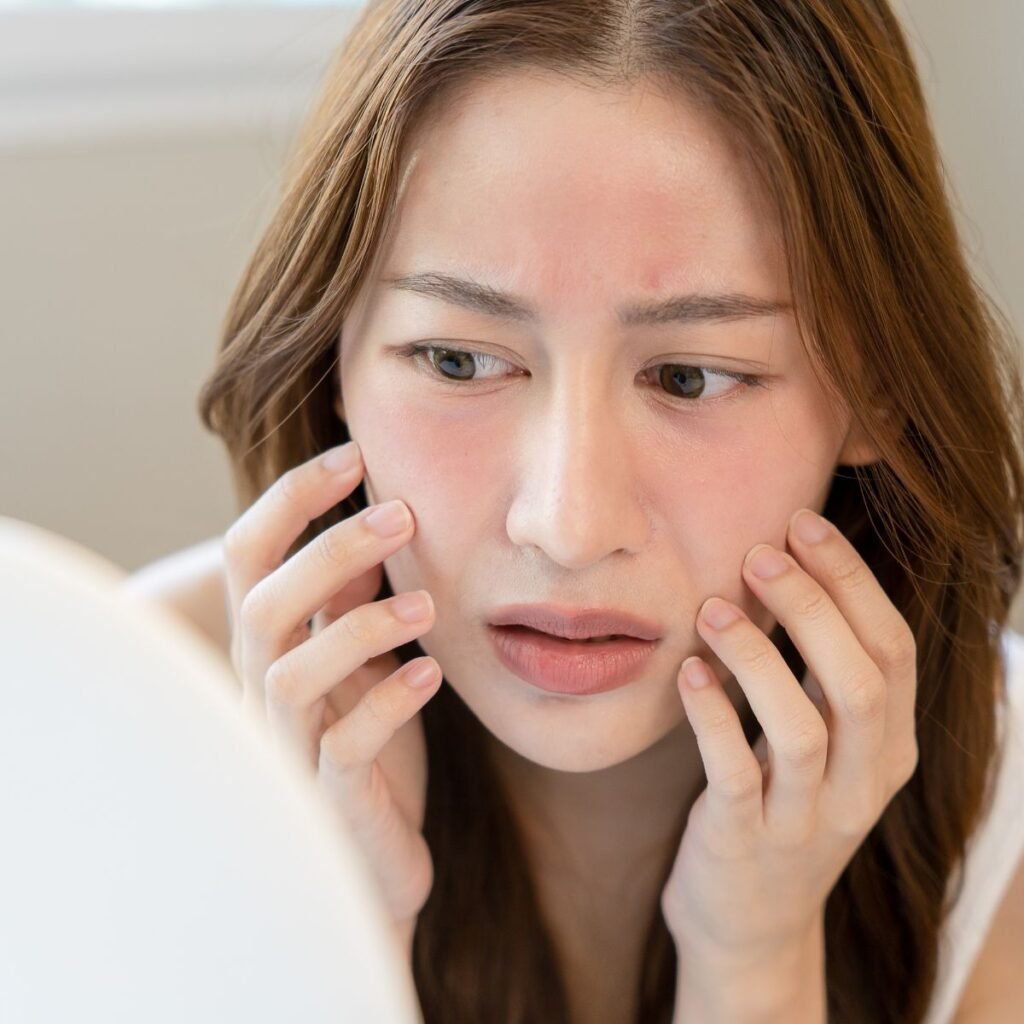
You wake up one morning, look in the mirror, and think, when did my face get so red? Or maybe it started with that moisturiser you’ve been using for years suddenly making your skin sting. Or the flush across your cheeks that won’t go away, no matter how much water you drink or sleep you get.
If you’re in your 40s and your skin feels like it’s completely rewritten its rulebook without telling you, I want you to know that you are not imagining it, you are not alone, and this is not permanent.
Your skin is changing because you are changing. Hormones are shifting, your skin cells turnover is slowing, and the protective barrier your skin once maintained with very little effort is now needing a little more support. This is not a flaw, it’s biology and once you understand what’s actually happening, you can work with your skin instead of against it.
Let’s talk about all the redness, the sensitivity, the rosacea questions, and the ingredients that can genuinely help nourish and heal your skin naturally.
Understanding the difference between rosacea and sensitive skin is crucial for managing your skin’s health effectively.
Why Does Everything Suddenly Feel Different? Understanding Your Skin in Your 40s
Perimenopause and menopause bring a cascade of hormonal changes particularly in oestrogen that directly affect your skin. Oestrogen plays a huge role in keeping skin plump, hydrated, and resilient. As levels begin to fluctuate and decline, here’s what can happen:
- Skin barrier thins and becomes more permeable, irritants are more easily able to penetrate the barrier and moisture escapes faster than it used to.
- Collagen production slows that once cushioned, bouncy skin starts to become more loose.
- Skin becomes drier and more reactive your skin starts responding in a reactive way to products it previously had no issue with.
- Redness and flushing become more common as blood vessel walls weaken slightly as your body’s temperature regulation changes.
None of this means your skin is broken. It means your skin needs a different kind of care, one that’s gentle, nourishing, and deeply moisturising.
How Do I Know If I Have Rosacea or Just Sensitive Skin?
“How do I know if I have rosacea or just sensitive skin?” This is a fair question because they can look and feel very similar for women in their 40s who are experiencing hormonal skin changes.
Sensitive skin
Tends to react to products, weather, or certain foods with temporary redness, stinging, or tightness but it usually calms down once the trigger is removed. It can affect any area of the body and typically doesn’t follow a consistent pattern.
Rosacea
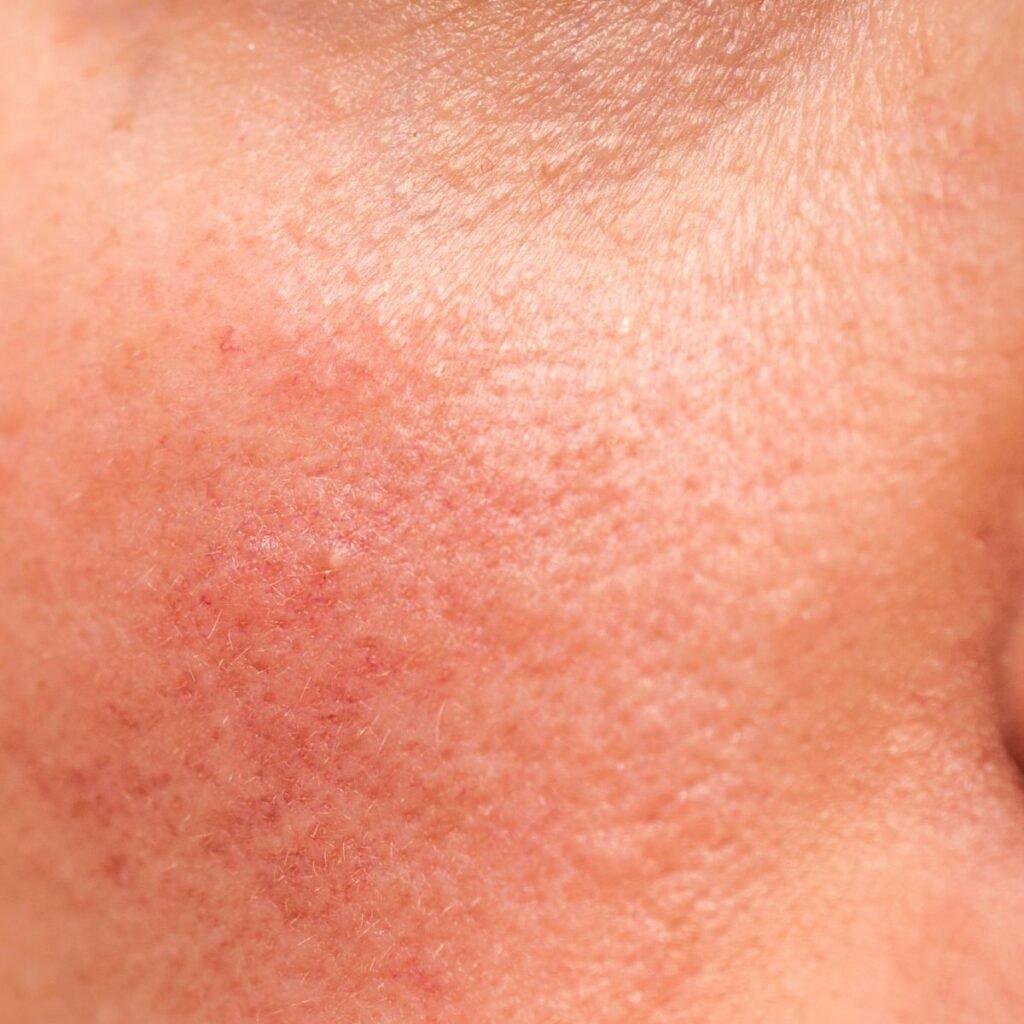
Is a chronic skin condition that tends to show up specifically on the central face, cheeks, nose, forehead, and chin. It may cause persistent redness, small visible blood vessels (broken capillaries), bumps that look like acne, and flushing that comes and goes but always returns. Unlike general sensitivity, rosacea has a more defined pattern and tends to flare with specific triggers like heat, alcohol, spicy food, stress, and sun exposure.
Here’s the thing though, it’s not uncommon with hormonal skin for you to experience both and at the same time. Sensitive skin and rosacea are not mutually exclusive and many women with rosacea also describe their skin as easily irritated and reactive. Understanding which you’re dealing with (or whether it’s a combination) shapes how you approach your skincare.
Why Do I Suddenly Have Rosacea?
Rosacea has a genetic component, meaning some people are predisposed to it from birth. But it often doesn’t become visible until midlife. This is because the hormonal shifts of perimenopause are one of the biggest known triggers for rosacea onset or worsening. The decrease in oestrogen affects the skin’s ability to regulate inflammation and blood vessel dilation, which are two key factors in rosacea.
Other contributors can include years of cumulative sun damage becoming more visible, a weakened skin barrier that’s less able to protect against environmental triggers, gut microbiome changes (the gut-skin connection is increasingly well documented), and chronic stress, which triggers cortisol and inflammation.
Managing rosacea or newly sensitised skin is not about finding a ‘miracle fix,’ and more about building a consistently gentle, supportive routine. Think of it like tending to something delicate slowly, carefully, and with intention.
How Do I Manage Sensitive Skin or New Rosacea?
Managing rosacea or newly sensitised skin is less about finding the ‘miracle fix’ and more about building a consistently gentle, supportive routine. Think of it like tending to something delicate slowly, carefully, and with intention.
Less is more
A two-step routine with the right products will always outperform a five-step routine full of active ingredients. Start simple and add one new thing at a time.
Know your triggers
Common culprits include hot drinks, spicy food, alcohol (especially red wine), vigorous exercise, extreme temperatures, certain skincare ingredients, and stress. A small trigger diary can be a game-changer.
SPF every single day
UV is one of the most consistent rosacea triggers. A mineral SPF with zinc oxide or titanium dioxide is better tolerated than chemical sunscreens for reactive skin.
Lukewarm water gentle cleansing
Not hot. Hot water dilates blood vessels and can trigger flushing instantly.
Pat dry, never rub
Friction aggravates reactive skin more than most people realise.
Moisturise on slightly damp skin
This seals in hydration far more effectively than applying to dry skin.
Apply all the above in a consistent skincare ritual and be patient and kind with yourself. This is a journey of learning your skin again, not seeing your skin as a problem to be solved overnight.
What Should You NOT Put on Rosacea?
Alcohol-based products: Ethanol and denatured alcohol can strip and dry the skin, compromise the barrier and worsen redness. Check ingredient lists carefully.
Fragranced products: One of the biggest irritation culprits, even when it’s natural. If it has a scent, your skin may react to it.
Essential oils: Peppermint, eucalyptus, and citrus are particularly problematic for reactive and rosacea-prone skin unless they are used in smaller approved concentrations.
Strong exfoliants: Physical scrubs, high-concentration AHAs/BHAs, and retinoids can all trigger flares, especially when your skin is already sensitised.
Witch hazel: Despite its skincare popularity, it’s astringent, which can be drying, and often irritating for reactive skin.
Menthol and camphor that cooling sensation comes at a cost as it can disrupt barrier function and provoke flushing.
*Golden rule: Always patch test new products. When in doubt, choose products formulated specifically for sensitive or rosacea-prone skin with minimal, gentle ingredients and less is always more.
What Calms Down Rosacea?
When your skin is flaring, the priority is calming inflammation, protecting the barrier, and restoring moisture. Here’s what tends to help:
Cool compresses can reduce flushing and redness quickly. Green tea extract has anti-inflammatory properties and is well-tolerated. Niacinamide (vitamin B3) at lower concentrations (around 2-5%) can reduce redness and strengthen the skin barrier. Ceramides help repair and maintain the skin barrier. Gentle, fragrance-free, rich moisturisers are your best friend and this is where the right natural oils and butters can genuinely change your skin’s experience.
Think soothing, nourishing, and protective. That’s the trifecta for calming reactive skin.
What Is the Best Moisturiser for Rosacea and Sensitive Skin?
The best moisturiser for rosacea and sensitive skin is one that deeply hydrates without relying on harsh preservatives or fragrances, contains anti-inflammatory and barrier-repairing ingredients, is rich enough to create a protective layer without clogging pores, and is as close to your skin’s natural lipid profile as possible.
This is exactly where plant-based oils and butters shine. These aren’t just marketing words. These ingredients have real, evidence-backed skin benefits that speak directly to what women with sensitive and rosacea-prone skin need.
Why SOLEILRA’s Ingredients Are Made for Skin Like Yours
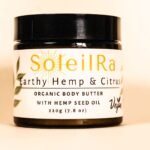
SOLEILRA body butters are formulated around a core of natural ingredients that work in harmony with sensitive, changing skin. Here’s why each one matters:
Rosehip Oil: Rich in essential fatty acids (omega-3 and omega-6) and natural trans-retinoic acid, rosehip oil helps repair the skin barrier, reduce redness, and fade the kind of post-inflammatory marks that often accompany rosacea flare-ups. It’s lightweight for an oil, absorbs beautifully, and has been used for generations to soothe irritated skin. Its anti-inflammatory properties make it genuinely valuable for reactive, rosacea-prone skin.
Mango Butter: Mango butter is a luxuriously rich, deeply nourishing butter with a fatty acid profile that closely mimics your skin’s natural sebum. This means it’s absorbed without feeling heavy or occlusive. It’s packed with antioxidants including vitamins A, C, and E, which help protect against environmental damage and support skin repair. For dry, sensitive skin that’s lost some of its natural plumpness, mango butter is deeply comforting.
Coconut Oil and Coconut Butter: Coconut oil contains lauric acid, which has antimicrobial and anti-inflammatory properties. It creates a protective barrier on the skin’s surface that helps prevent moisture loss particularly helpful for skin that’s struggling to retain hydration on its own. While some people with acne-prone skin are cautious with coconut oil, for dry, sensitive, or rosacea-prone skin on the body, it can be deeply soothing and nourishing.
Hemp Seed Oil and Hemp Seed Butter: Hemp seed oil is genuinely exciting for sensitive and inflamed skin. It has a near-perfect ratio of omega-6 to omega-3 fatty acids (around 3:1), which mirrors what your skin barrier needs to function optimally. It’s rich in gamma-linolenic acid (GLA), which has specific anti-inflammatory effects. Research has shown hemp seed oil can significantly reduce skin dryness and itching, improve barrier function, and calm inflammatory skin conditions. This makes it a powerful ally for skin experiencing rosacea or heightened reactivity.
Jojoba Oil: Jojoba is technically a wax ester and here’s why that’s remarkable: it is structurally the closest thing in nature to your skin’s own sebum. This makes it incredibly well-tolerated, even by the most sensitive skin types. It won’t clog pores, it absorbs quickly, and it helps regulate moisture balance. Jojoba also has mild anti-inflammatory properties and forms a breathable, protective barrier. It’s often recommended by dermatologists for sensitive skin precisely because it’s so compatible with human skin chemistry.
Almond Oil (Sweet Almond Oil): Sweet almond oil is a skin classic for good reason. It’s rich in oleic acid, linoleic acid, and vitamin E, a combination that nourishes, protects, and soothes. It’s gentle enough for the most reactive skin and absorbs without greasiness. Vitamin E in particular is a known skin protector, helping defend against the environmental oxidative stress that can trigger or worsen rosacea flare-ups. It also helps maintain the skin’s natural moisture levels, which is essential when hormonal changes are causing increased dryness.
Putting It All Together
You don’t need a complicated routine. In fact, for sensitive and rosacea-prone skin, simplicity is your greatest ally. A gentle cleanser with no fragrance or harsh surfactants. A soothing, rich moisturiser with the kind of nourishing natural ingredients described above. Mineral SPF every morning without exception. And for your body where skin changes in your 40s are just as real, just as significant, and often far more overlooked, a body butter rich in the natural oils and butters your skin is now craving.
SOLEILRA was created with exactly this in mind: skin that deserves real nourishment, real care, and real ingredients not synthetic shortcuts.
Your Skin Is Still Beautiful
Navigating skin changes in your 40s can feel frustrating, even isolating. But it helps to remember this is not your skin failing. This is your skin communicating. It’s asking for gentleness. For nourishment. For patience.
And the beautiful thing is, when you listen, when you give your skin what it’s asking for, it responds. The redness calms. The tightness eases. That glow you thought was gone? It comes back.
You Are Invited
To join our Glow & Nourish Club community of “Glow Getters” of women who value age-positive natural skincare tips and VIP discounts.
#Roscea #SensitiveSkin #CreultyFreeIngredients #BodyButter #AgePositive #SoleilraSkincare
This blog is for informational purposes only and does not constitute medical or dermatological advice. If you are experiencing persistent skin concerns, please consult a qualified dermatologist or healthcare professional.
*This post may contain affiliate links. If you purchase through these links, I may earn a small commission at no extra cost to you. I only recommend products I genuinely believe may be helpful.